Argentina is just the latest example of a nation who prints currency to
pay for a government that has overtaken the free market private
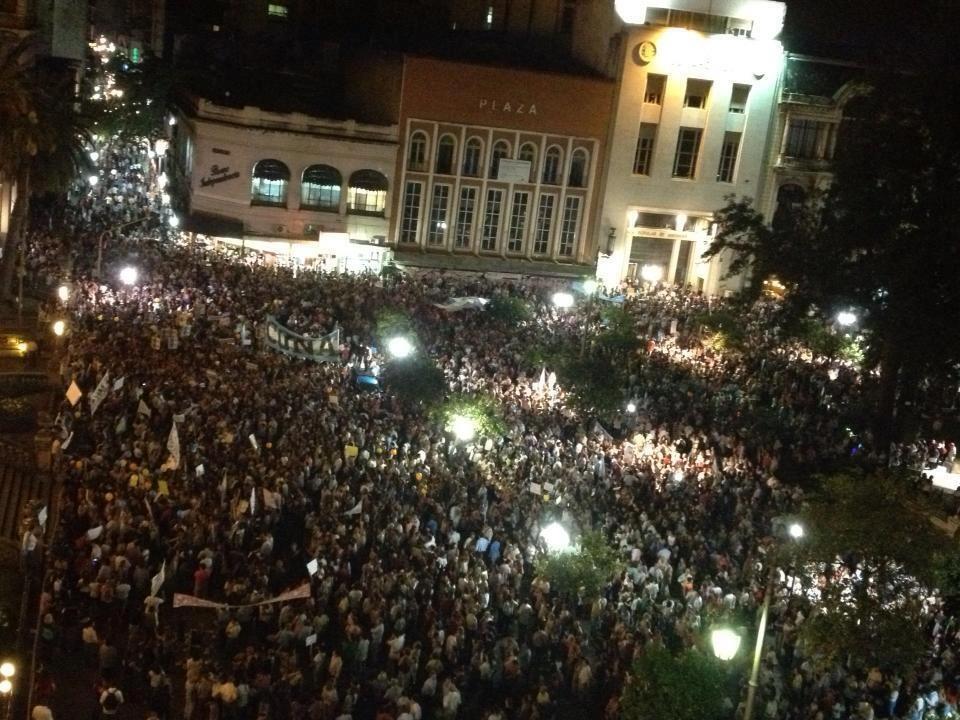
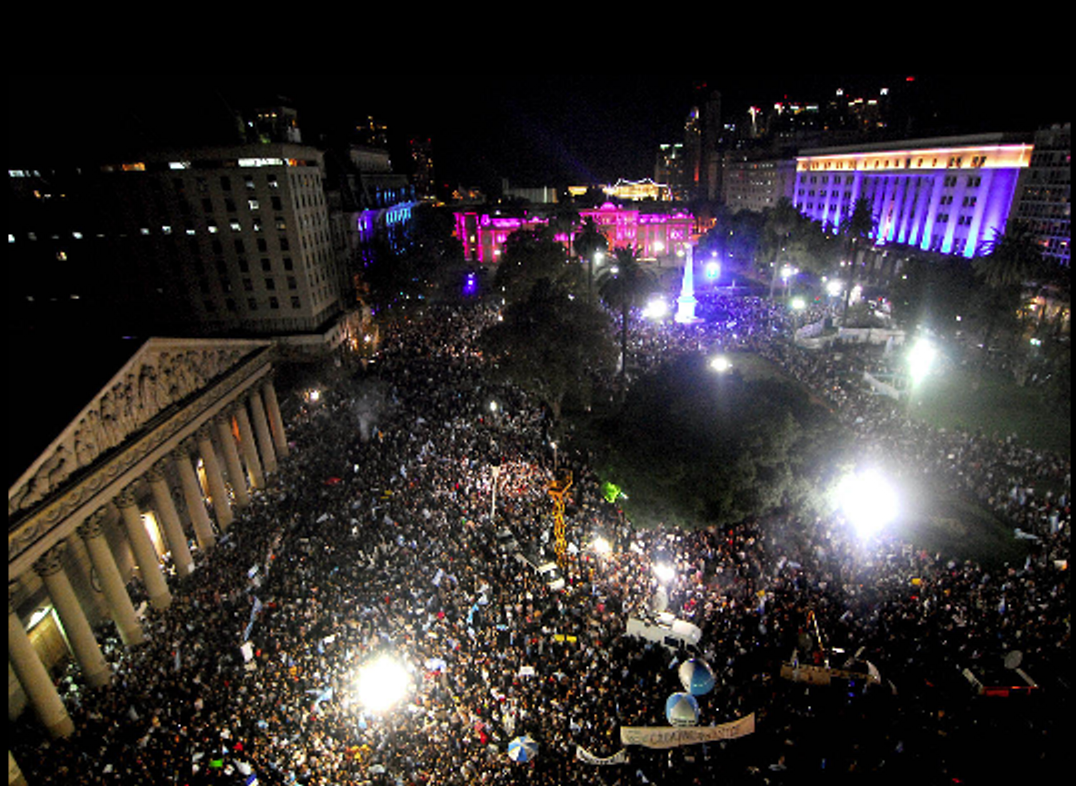
economy. The power grabs have finally devolved into outright mass street
protests, as the Argentine goverment bans recourse against the government via the court system, with the exception of loss of health or life (even that was given a six-month limit).
The effects of the government printing currency, rising food prices, are estimated at over 25% this year, and have persisted for a few years, similar to the period for the U.S. in the mid-to-late 1970’s. Continued below...
 When grocery prices rise faster than the population expects, families
begin to fear they may not be able to make ends meet the following week.
Governments often respond with the moronic idea of making the sale of
goods above some specific price illegal, otherwise known as price
controls. Investopedia remindsreaders to “consider
the price controls placed by the Nixon and Carter administrations on
gasoline, which led to long lines at the pump and restrictions on how
much gas could be purchased during the 1970s.”
When grocery prices rise faster than the population expects, families
begin to fear they may not be able to make ends meet the following week.
Governments often respond with the moronic idea of making the sale of
goods above some specific price illegal, otherwise known as price
controls. Investopedia remindsreaders to “consider
the price controls placed by the Nixon and Carter administrations on
gasoline, which led to long lines at the pump and restrictions on how
much gas could be purchased during the 1970s.”
Argentina is following the script to a tee:
Here in the U.S., businesses have had troubles accepting payments from Argentinian citizens who want to save in silver and gold coins to preserve any of their remaining purchasing power. These are capital controls and are the final stage in suppression of natural rights. Here is what Austrian economist and Nobel-prize winner F.A. Hayek had this to say on what these controls do to the natural rights of the working family:
Hayek is best known for his book, The Road to Serfdom (here’s a short picture version). Argentina has driven down this road to serfdom before, and as Austrian economists emphasize, the public’s expectations for the rate of future price rises mattered here. Argentina’s last currency crisis was in 2002, so the public readily understands how, as currency is printed, prices rise. For that reason the expectations of the Argentinean public are much further advanced; they expect, and thus act, in a manner that accelerates the ultimate outcome at a pace unmatched in regions where price “inflation expectations [are] anchored” (such as the U.S., or Japan).
Argentina’s populist female president, Christina Kirchner, recently ordered a price freeze on food products. This price freeze "was levied against the largest food retailers in the country, and it is just the latest example of utterly insane economic policies made by populist leaders who inevitably end up causing massive suffering and economic damage to the nations they claim to lead.” These types of policies have led to food shortages and riots and can bring some pretty harsh questions into sharp focus as one searches for answers.
The process of “becoming Argentina” is still underway in the U.S., slowed dramatically as printed currency can bid on assets overseas, creating rising prices abroad, because the U.S. still maintains the world reserve currency status.
As this ploy becomes increasingly unacceptable, currency will return to our shores, confidence will wane, and local prices for staples will begin to approach the double-digit rates of increase last seen over 30 years ago.
Those who prepare today, for the events seen time and time again throughout history (in some places more frequently than in others), will reap the biggest financial reward in recorded human history because the biggest debt-currency bubble in human history is being blown.
Except that this time, it is a global experiment. What could possibly go wrong?
Source
The effects of the government printing currency, rising food prices, are estimated at over 25% this year, and have persisted for a few years, similar to the period for the U.S. in the mid-to-late 1970’s. Continued below...
When grocery prices rise faster than the population expects, families
begin to fear they may not be able to make ends meet the following week.
Governments often respond with the moronic idea of making the sale of
goods above some specific price illegal, otherwise known as price
controls. Investopedia remindsreaders to “consider
the price controls placed by the Nixon and Carter administrations on
gasoline, which led to long lines at the pump and restrictions on how
much gas could be purchased during the 1970s.”Argentina is following the script to a tee:
1. Print currency to pay for a burgeoning government (lie about the rate of rising prices).
2. Capital controls limit transactions out of the local currency (your labor and the purchasing power you have earned can’t be transferred into a new medium for protection).
3. Price controls
limit prices of staples using force (shortages develop, and rationing
begins as for-profit production cannot continue, and a true shortage
appears for staples such as gasoline).
Here in the U.S., businesses have had troubles accepting payments from Argentinian citizens who want to save in silver and gold coins to preserve any of their remaining purchasing power. These are capital controls and are the final stage in suppression of natural rights. Here is what Austrian economist and Nobel-prize winner F.A. Hayek had this to say on what these controls do to the natural rights of the working family:
The extent of the control over all life that economic control
confers is nowhere better illustrated than in the field of foreign
exchanges… experience of most Continental countries has taught
thoughtful people to regard this step as the decisive advance on the
path to totalitarianism and the suppression of individual liberty.
It is, in fact, the complete delivery of the individual to the
tyranny of the state, the final suppression of all means of escape—not
merely for the rich but for everybody.
It should not go without note that F.A. Hayek was very well respected
by London School economist Karl Popper, who said he has learned more
from Hayek “than possibly anyone else alive.” While at the London
School, George Soros studied under Popper, adopting the Austrian idea
that expectations matter as much as present conditions in price
formation. The fact that there exists significant “reflexivity,” or
circular feedback, between market participants and the ultimate outcome
of market events is no special surprise.Hayek is best known for his book, The Road to Serfdom (here’s a short picture version). Argentina has driven down this road to serfdom before, and as Austrian economists emphasize, the public’s expectations for the rate of future price rises mattered here. Argentina’s last currency crisis was in 2002, so the public readily understands how, as currency is printed, prices rise. For that reason the expectations of the Argentinean public are much further advanced; they expect, and thus act, in a manner that accelerates the ultimate outcome at a pace unmatched in regions where price “inflation expectations [are] anchored” (such as the U.S., or Japan).
Argentina’s populist female president, Christina Kirchner, recently ordered a price freeze on food products. This price freeze "was levied against the largest food retailers in the country, and it is just the latest example of utterly insane economic policies made by populist leaders who inevitably end up causing massive suffering and economic damage to the nations they claim to lead.” These types of policies have led to food shortages and riots and can bring some pretty harsh questions into sharp focus as one searches for answers.
· What would you do if the currency suddenly crashed?
· Would government imposed price controls again mean shortages?
· Would you be prepared for store shelves clearing quickly?
· What would you do if, like tens of millions of others, you found yourself out of a job?
These questions seem removed from reality, but this is simply because
the media does not want to focus on the real issues at hand. Right now
in Greece there are conditions more severe than in the Great Depression;
school children are foraging in garbage cans for food, bent over in hunger.
“What’s frightening is the speed at which it is happening.” When the hunger comes... “It’s simple,” she said. “You get hungry, you get dizzy and you sleep it off.”
This economic collapse resulted from planners messing with currency,
rather than letting the free market balance out prices, and allowing
bankruptcy to balance out bank insolvency.The process of “becoming Argentina” is still underway in the U.S., slowed dramatically as printed currency can bid on assets overseas, creating rising prices abroad, because the U.S. still maintains the world reserve currency status.
As this ploy becomes increasingly unacceptable, currency will return to our shores, confidence will wane, and local prices for staples will begin to approach the double-digit rates of increase last seen over 30 years ago.
Those who prepare today, for the events seen time and time again throughout history (in some places more frequently than in others), will reap the biggest financial reward in recorded human history because the biggest debt-currency bubble in human history is being blown.
Except that this time, it is a global experiment. What could possibly go wrong?
Source


