How in the world is someone supposed to actually prepare for an economic collapse? What should you do with your money? How can you make sure that your family is going to be okay? How can you prepare if your resources are extremely limited? These are the kinds of questions people ask me all the time.
Once people understand that the economy has been collapsing and will continue to collapse, then the next step for most of them is that they want to get prepared for the storm that is coming. So where should someone get started? Well, the truth is that no two people are facing the exact same set of circumstances, so preparation is going to look different for each individual. But there are certain core principles that we can all benefit from. For example, when a financial storm is coming that is not the time to be blowing thousands of dollars on vacations and new toys.
You would be surprised at how many people there are that claim that they have no extra money in their budgets and yet somehow have plenty of money to run down to Wal-Mart and buy a big stack of DVDs.
When times are difficult, each hard-earned dollar becomes much more precious, and we all need to start getting into the habit of making the most out of our limited resources. The seemingly endless prosperity that we have all been enjoying for decades is coming to an end, and most of us have absolutely no experience on how to deal with truly hard times. If you are under the age of 60, it might be a really good idea to read a book or two on what conditions were like during the Great Depression of the 1930s. There is a lot that we can learn from our own history.
Another key characteristic that we will all need in the years ahead is flexibility. Anyone that has spent any time in the military knows that very few plans ever work out perfectly. As the global economy breaks down and the world becomes increasingly unstable, conditions are going to change rapidly. What might work really well in one situation might be the exact wrong thing to do 6 months later. If you are not willing or able to adapt to dramatic change then you are going to have a lot of difficulty in the years ahead.
Many people refer to me as a "doom and gloomer" because I run a website called "The Economic Collapse" and I am constantly pointing out that the entire world is heading for a complete and total financial nightmare.
But I don't think that it does any good to stick your head in the sand. I believe that there is hope in understanding what is happening and I believe that there is hope in getting prepared.
It is those that are completely oblivious to what is really going on that will be totally blindsided by the coming crisis. When they finally realize what has come upon them many of them will totally lose it.
From my little spot on the wall I am trying my best to warn people so that they can have a chance to be prepared for what is coming.
I am not spreading doom and gloom.
I am spreading hope.
And I want to make another point. Generally, things are going to be getting progressively worse as the years roll along. As I have written about before, I believe that the economic collapse is not a single event. Rather, I see it as a series of waves that will be punctuated by moments of great crisis.
So advice about preparation is going to be different depending on whether you are talking about the short-term or the mid-term or the long-term. Hopefully you will keep that in mind as you read my answers to the questions below.
The following are common questions that people ask about how to prepare for the collapse of the economy....
#1 How Do I Get Started?
When the financial crisis of 2008 hit, what was the biggest danger for most Americans?
The biggest danger was that they would lose their jobs and not be able to pay their bills.
During the last recession, millions and millions of Americans did end up losing their jobs.
And because many of them were living paycheck to paycheck many of them also ended up losing their homes.
You do not want that to happen to you.
So what I am about to say next is not considered to be very "sexy" in prepper circles, but it is absolutely crucial advice.
You need to have an emergency fund saved up that can cover your expenses for at least six months.
That way if you lose your job or your business goes under you will be able to keep going for a while as you figure out what your next move will be.
These days it takes the average unemployed American nearly 40 weeks to find a new job, and it will likely be even worse in the next major economic downturn.
So make sure that you have plenty of cash saved up just in case. If you are currently living paycheck to paycheck you are extremely vulnerable.
#2 What Should I Do With My Money?
I get this question a lot.
People always want to know where they should put their money.
Well, my first piece of advice is always to build an emergency fund. See #1 above. Most people do not have one.
After that is done, I am a big believer in not putting all of my eggs into one basket.
Sometimes people will tell me that they are going to take all of their money out of the banks because they don't feel safe having their money in them.
Well, if you stick all of your money in your mattress, what happens if there is a fire or what happens if someone robs you?
That is why I believe in spreading your risk around. Having money a bunch of different places is a good thing.
But one place I would not put it is in the stock market. If you were fortunate enough to catch the recent rally you should get out while the getting is good.
If you have blind faith in the stock market you are going to be deeply disappointed eventually. I do not have a single penny in the stock market, and a couple of years from now that is going to look like a very wise move.
#3 Should I Invest In Precious Metals?
A lot of people that write about the economic crisis in this country really advocate investing in precious metals because they tend to hold value over time (unlike fiat currencies).
I like precious metals myself, but if you are going to invest you need to get educated so that you know what you are doing. If you go in blindly you are likely to get burned at some point.
In addition, you need to be prepared for wild fluctuations in price over the coming years. There will be times when gold and silver absolutely soar and there will be times when they drop like a rock.
So if you are going to play the game you need to be able to handle the ride.
#4 Should I Get Out Of Debt?
Many that write about the coming economic collapse say that you shouldn't even bother to pay off your debts because the financial system is going to collapse anyway.
I don't see it that way.
I don't believe that our banks are going to totally collapse and suddenly go out of existence.
Not in the short-term anyway.
So I believe that it is actually a good idea to get out of debt. When financial troubles hit you don't want a horde of bill collectors coming after you.
There is a lot of freedom that comes with getting out of debt, and in this environment it is wise to become as independent of the system as possible.
#5 What If I Don't Have Any Money To Prepare?
In this kind of economic environment it is no surprise that I get this question a lot.
Many families are just barely scraping by each month and they do not have much money to put into anything.
And I can definitely sympathize with that.
However, I would say that there are very, very few families out there that do not have anything that can be cut out of the budget.
The truth is that American families are experts at blowing money on really stupid stuff.
In general, I recommend that all families do what they can to reduce their expenses.
The smaller of a financial footprint you have, the better off you will be and the more resources you will have to help you get prepared.
Also, now is the time to be looking for ways that you can increase your income.
For many Americans, starting a side business is a way to bring in some extra cash. Yes, this will cut into your television watching time, but now is not the time to be lazy.
The time you spend working hard now while the sun is still shining will pay off later.
Don't be afraid to work harder than you ever have before.
#6 Should I Rent Or Buy?
This is a question that I also get a lot, and it really depends on your situation.
If you rent, that gives you a lot more flexibility. You can move for a new job or a new opportunity without having to sell a house. And you get to avoid a lot of the expenses and hassles that come with being a homeowner.
If you buy, you get to "lock in" your housing expenses for many years. In a highly inflationary environment this would potentially be very beneficial. And interest rates are very low right now.
In addition, it is going to be really hard to rent a really good "prepper" property. If you are looking for a property that is away from the big cities where you can grow your own food and become more independent of the system, then in most cases you are going to have to buy such a property.
But if you do buy, it is going to be much harder to move if something does happen and you need to go somewhere else.
#7 What About My Health Condition?
Over the next few years, our health care system should continue operating at least somewhat normally. But the truth is that our health care system is in horrible shape and it is not a good thing to be totally dependent on pills and doctors.
Even if economic conditions were perfect it would be a good idea to learn what you can do on your own to improve your health. But this is especially true as we move into a time of great economic instability.
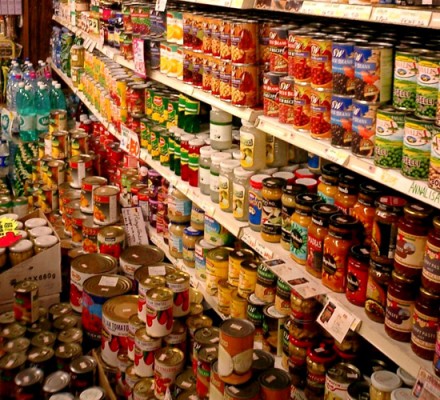
#8 Should I Be Storing Food?
Yes.
However, even though the United States is experiencing a historic drought right now, I do not believe that there will be major food shortages in America this year or next year.
Down the road, however, is a different story.
And your food dollars are never going to go farther than they do right now. As I wrote about the other day, this drought is likely to cause food prices to go up substantially, and so the food you store now might end up being twice as valuable a few years from now.
In addition, you never know when a major disaster or emergency is going to strike so it is always good to become more independent of the system.
I encourage everyone to learn how to grow a garden. Yes, your space may be limited, but there is actually one family that produces 6000 pounds of produce every year on just 1/10th of an acre right in the middle of Pasadena, California.
If they can do such extraordinary things with their little plot of land, why can't you try to do what you can with what you have?
#9 Should I Be Storing Water?
It is always good to have some water on hand in case disaster or emergency strikes.
And you should be rotating whatever water you currently have on hand because you don't want water sitting around indefinitely.
But what is much more important is to make sure that you and your family have access to a source of water that you can depend on if disaster strikes and the grid goes down.
In a previous article I discussed a report put out by the American Trucker Associations entitled "When Trucks Stop, America Stops" that detailed just how incredibly vulnerable our water supply really is....
According to the American Water Works Association, Americans drink more than one billion glasses of tap water per day. For safety and security reasons, most water supply plants maintain a larger inventory of supplies than the typical business. However, the amount of chemical storage varies significantly and is site specific. According to the Chlorine Institute, most water treatment facilities receive chlorine in cylinders (150 pounds and one ton cylinders) that are delivered by motor carriers. On average, trucks deliver purification chemicals to water supply plants every seven to 14 days. Without these chemicals, water cannot be purified and made safe for drinking. Without truck deliveries of purification chemicals, water supply plants will run out of drinkable water in 14 to 28 days. Once the water supply is drained, water will be deemed safe for drinking only when boiled. Lack of clean drinking water will lead to increased gastrointestinal and other illnesses, further taxing an already weakened healthcare system.
So yes, water is definitely something you should be accounting for in your preparations.
#10 Other Than Food And Water What Other Supplies Will I Need?
Anything that you use on a regular basis or that you would use in an emergency situation is something that you should consider storing up.
For example, if you could not buy any more toilet paper from the stores, what would you do?
Basic things like that are often overlooked by many preppers.
In a previous article, I listed dozens of things you may want to consider storing. Preparation is going to look different for every family, but hopefully that list will give you some ideas.
#11 What Happens If The Power Grid Goes Down?
This is a very important consideration - especially if you live in a colder climate.
Some people have a backup generator for such circumstances.
Others have set up wind and/or solar systems for their homes.
Alternative energy solutions are great if you can afford them, and they will enable you to become much more independent of the system.
But not everyone can afford to put in solar panels or a big wind turbine.
So do what you can with what you have.
#12 Should I Leave The Big Cities?
A lot of people ask me this, but there is no easy answer.
In this day and age, a good job is like gold. It can be really, really tough to give up a good job and move to the middle of nowhere.
But without a doubt, society is starting to come apart at the seams and I do expect rioting and major civil unrest in our major cities at some point in the future.
In the end, you need to do what is right for you and your own family. Nobody else can make this decision for you.
#13 Should I Get Some Self-Defense Training?
America seems to be overrun by psychopaths and sociopaths these days, and in such an environment being able to defend yourself becomes more important.
When criminals come to your home, they are not going to sit down and have a debate with you. They are not going to care what your political outlook is or if you sympathize with their plight.
The criminals are simply going to do what they came there to do unless someone stops them.
So yes, some self-defense training may come in very handy in the years ahead.
#14 What Should I Do If My Family And Friends Won't Listen To Me?
This is another very common question that I get.
What should people do if nobody will listen to them?
Well, you just have to do the best that you can. If they won't listen now, just keep planting seeds. Keep sending them articles that are packed with statistics and information that show why an economic collapse is going to happen.
In the years ahead we are all going to need our families and our friends because communities will endure what is coming much better than "lone wolf" individuals will be able to.
No matter how hard you prepare, at some point you are going to need the help of someone else.
So don't be afraid to reach out to others.
If nobody among your family or friends will listen to you at the moment, you may have to prepare on your own right now.
In fact, you may have to do extra preparation because at some point it is probably inevitable that your family and friends will come to you for help.
That is the perspective that my wife and I take. We are not only preparing for ourselves. We are also preparing for the family members that may have to depend on us someday.
Nobody said that preparing was going to be easy.
But beyond any physical preparations, I also believe that it is absolutely crucial to prepare mentally and spiritually.
The times that are coming are going to be incredibly challenging. They are going to require a great deal of physical, mental, emotional and spiritual strength.
If you are a "lone wolf" that believes that you don't need anyone or anything, then I feel sorry for you and I honestly don't know how you are going to make it.
None of us have all the answers.
I know that I certainly do not.
I have just written nearly 3000 words, but after I post this article I know that some of the great visitors to my site will post ideas that I never even considered for this article.
We can all learn from each other. Most of the people that I have met that think "they know it all" are some of the most clueless people that I have ever come across.
I never want to stop learning, and hopefully that is the case for you as well.
If we work together, perhaps we can all make it through the horrible, horrible times that are coming.
Another key characteristic that we will all need in the years ahead is flexibility. Anyone that has spent any time in the military knows that very few plans ever work out perfectly. As the global economy breaks down and the world becomes increasingly unstable, conditions are going to change rapidly. What might work really well in one situation might be the exact wrong thing to do 6 months later. If you are not willing or able to adapt to dramatic change then you are going to have a lot of difficulty in the years ahead.
Many people refer to me as a "doom and gloomer" because I run a website called "The Economic Collapse" and I am constantly pointing out that the entire world is heading for a complete and total financial nightmare.
But I don't think that it does any good to stick your head in the sand. I believe that there is hope in understanding what is happening and I believe that there is hope in getting prepared.
It is those that are completely oblivious to what is really going on that will be totally blindsided by the coming crisis. When they finally realize what has come upon them many of them will totally lose it.
From my little spot on the wall I am trying my best to warn people so that they can have a chance to be prepared for what is coming.
I am not spreading doom and gloom.
I am spreading hope.
And I want to make another point. Generally, things are going to be getting progressively worse as the years roll along. As I have written about before, I believe that the economic collapse is not a single event. Rather, I see it as a series of waves that will be punctuated by moments of great crisis.
So advice about preparation is going to be different depending on whether you are talking about the short-term or the mid-term or the long-term. Hopefully you will keep that in mind as you read my answers to the questions below.
The following are common questions that people ask about how to prepare for the collapse of the economy....
#1 How Do I Get Started?
When the financial crisis of 2008 hit, what was the biggest danger for most Americans?
The biggest danger was that they would lose their jobs and not be able to pay their bills.
During the last recession, millions and millions of Americans did end up losing their jobs.
And because many of them were living paycheck to paycheck many of them also ended up losing their homes.
You do not want that to happen to you.
So what I am about to say next is not considered to be very "sexy" in prepper circles, but it is absolutely crucial advice.
You need to have an emergency fund saved up that can cover your expenses for at least six months.
That way if you lose your job or your business goes under you will be able to keep going for a while as you figure out what your next move will be.
These days it takes the average unemployed American nearly 40 weeks to find a new job, and it will likely be even worse in the next major economic downturn.
So make sure that you have plenty of cash saved up just in case. If you are currently living paycheck to paycheck you are extremely vulnerable.
#2 What Should I Do With My Money?
I get this question a lot.
People always want to know where they should put their money.
Well, my first piece of advice is always to build an emergency fund. See #1 above. Most people do not have one.
After that is done, I am a big believer in not putting all of my eggs into one basket.
Sometimes people will tell me that they are going to take all of their money out of the banks because they don't feel safe having their money in them.
Well, if you stick all of your money in your mattress, what happens if there is a fire or what happens if someone robs you?
That is why I believe in spreading your risk around. Having money a bunch of different places is a good thing.
But one place I would not put it is in the stock market. If you were fortunate enough to catch the recent rally you should get out while the getting is good.
If you have blind faith in the stock market you are going to be deeply disappointed eventually. I do not have a single penny in the stock market, and a couple of years from now that is going to look like a very wise move.
#3 Should I Invest In Precious Metals?
A lot of people that write about the economic crisis in this country really advocate investing in precious metals because they tend to hold value over time (unlike fiat currencies).
I like precious metals myself, but if you are going to invest you need to get educated so that you know what you are doing. If you go in blindly you are likely to get burned at some point.
In addition, you need to be prepared for wild fluctuations in price over the coming years. There will be times when gold and silver absolutely soar and there will be times when they drop like a rock.
So if you are going to play the game you need to be able to handle the ride.
#4 Should I Get Out Of Debt?
Many that write about the coming economic collapse say that you shouldn't even bother to pay off your debts because the financial system is going to collapse anyway.
I don't see it that way.
I don't believe that our banks are going to totally collapse and suddenly go out of existence.
Not in the short-term anyway.
So I believe that it is actually a good idea to get out of debt. When financial troubles hit you don't want a horde of bill collectors coming after you.
There is a lot of freedom that comes with getting out of debt, and in this environment it is wise to become as independent of the system as possible.
#5 What If I Don't Have Any Money To Prepare?
In this kind of economic environment it is no surprise that I get this question a lot.
Many families are just barely scraping by each month and they do not have much money to put into anything.
And I can definitely sympathize with that.
However, I would say that there are very, very few families out there that do not have anything that can be cut out of the budget.
The truth is that American families are experts at blowing money on really stupid stuff.
In general, I recommend that all families do what they can to reduce their expenses.
The smaller of a financial footprint you have, the better off you will be and the more resources you will have to help you get prepared.
Also, now is the time to be looking for ways that you can increase your income.
For many Americans, starting a side business is a way to bring in some extra cash. Yes, this will cut into your television watching time, but now is not the time to be lazy.
The time you spend working hard now while the sun is still shining will pay off later.
Don't be afraid to work harder than you ever have before.
#6 Should I Rent Or Buy?
This is a question that I also get a lot, and it really depends on your situation.
If you rent, that gives you a lot more flexibility. You can move for a new job or a new opportunity without having to sell a house. And you get to avoid a lot of the expenses and hassles that come with being a homeowner.
If you buy, you get to "lock in" your housing expenses for many years. In a highly inflationary environment this would potentially be very beneficial. And interest rates are very low right now.
In addition, it is going to be really hard to rent a really good "prepper" property. If you are looking for a property that is away from the big cities where you can grow your own food and become more independent of the system, then in most cases you are going to have to buy such a property.
But if you do buy, it is going to be much harder to move if something does happen and you need to go somewhere else.
#7 What About My Health Condition?
Over the next few years, our health care system should continue operating at least somewhat normally. But the truth is that our health care system is in horrible shape and it is not a good thing to be totally dependent on pills and doctors.
Even if economic conditions were perfect it would be a good idea to learn what you can do on your own to improve your health. But this is especially true as we move into a time of great economic instability.
#8 Should I Be Storing Food?
Yes.
However, even though the United States is experiencing a historic drought right now, I do not believe that there will be major food shortages in America this year or next year.
Down the road, however, is a different story.
And your food dollars are never going to go farther than they do right now. As I wrote about the other day, this drought is likely to cause food prices to go up substantially, and so the food you store now might end up being twice as valuable a few years from now.
In addition, you never know when a major disaster or emergency is going to strike so it is always good to become more independent of the system.
I encourage everyone to learn how to grow a garden. Yes, your space may be limited, but there is actually one family that produces 6000 pounds of produce every year on just 1/10th of an acre right in the middle of Pasadena, California.
If they can do such extraordinary things with their little plot of land, why can't you try to do what you can with what you have?
#9 Should I Be Storing Water?
It is always good to have some water on hand in case disaster or emergency strikes.
And you should be rotating whatever water you currently have on hand because you don't want water sitting around indefinitely.
But what is much more important is to make sure that you and your family have access to a source of water that you can depend on if disaster strikes and the grid goes down.
In a previous article I discussed a report put out by the American Trucker Associations entitled "When Trucks Stop, America Stops" that detailed just how incredibly vulnerable our water supply really is....
According to the American Water Works Association, Americans drink more than one billion glasses of tap water per day. For safety and security reasons, most water supply plants maintain a larger inventory of supplies than the typical business. However, the amount of chemical storage varies significantly and is site specific. According to the Chlorine Institute, most water treatment facilities receive chlorine in cylinders (150 pounds and one ton cylinders) that are delivered by motor carriers. On average, trucks deliver purification chemicals to water supply plants every seven to 14 days. Without these chemicals, water cannot be purified and made safe for drinking. Without truck deliveries of purification chemicals, water supply plants will run out of drinkable water in 14 to 28 days. Once the water supply is drained, water will be deemed safe for drinking only when boiled. Lack of clean drinking water will lead to increased gastrointestinal and other illnesses, further taxing an already weakened healthcare system.
So yes, water is definitely something you should be accounting for in your preparations.
#10 Other Than Food And Water What Other Supplies Will I Need?
Anything that you use on a regular basis or that you would use in an emergency situation is something that you should consider storing up.
For example, if you could not buy any more toilet paper from the stores, what would you do?
Basic things like that are often overlooked by many preppers.
In a previous article, I listed dozens of things you may want to consider storing. Preparation is going to look different for every family, but hopefully that list will give you some ideas.
#11 What Happens If The Power Grid Goes Down?
This is a very important consideration - especially if you live in a colder climate.
Some people have a backup generator for such circumstances.
Others have set up wind and/or solar systems for their homes.
Alternative energy solutions are great if you can afford them, and they will enable you to become much more independent of the system.
But not everyone can afford to put in solar panels or a big wind turbine.
So do what you can with what you have.
#12 Should I Leave The Big Cities?
A lot of people ask me this, but there is no easy answer.
In this day and age, a good job is like gold. It can be really, really tough to give up a good job and move to the middle of nowhere.
But without a doubt, society is starting to come apart at the seams and I do expect rioting and major civil unrest in our major cities at some point in the future.
In the end, you need to do what is right for you and your own family. Nobody else can make this decision for you.
#13 Should I Get Some Self-Defense Training?
America seems to be overrun by psychopaths and sociopaths these days, and in such an environment being able to defend yourself becomes more important.
When criminals come to your home, they are not going to sit down and have a debate with you. They are not going to care what your political outlook is or if you sympathize with their plight.
The criminals are simply going to do what they came there to do unless someone stops them.
So yes, some self-defense training may come in very handy in the years ahead.
#14 What Should I Do If My Family And Friends Won't Listen To Me?
This is another very common question that I get.
What should people do if nobody will listen to them?
Well, you just have to do the best that you can. If they won't listen now, just keep planting seeds. Keep sending them articles that are packed with statistics and information that show why an economic collapse is going to happen.
In the years ahead we are all going to need our families and our friends because communities will endure what is coming much better than "lone wolf" individuals will be able to.
No matter how hard you prepare, at some point you are going to need the help of someone else.
So don't be afraid to reach out to others.
If nobody among your family or friends will listen to you at the moment, you may have to prepare on your own right now.
In fact, you may have to do extra preparation because at some point it is probably inevitable that your family and friends will come to you for help.
That is the perspective that my wife and I take. We are not only preparing for ourselves. We are also preparing for the family members that may have to depend on us someday.
Nobody said that preparing was going to be easy.
But beyond any physical preparations, I also believe that it is absolutely crucial to prepare mentally and spiritually.
The times that are coming are going to be incredibly challenging. They are going to require a great deal of physical, mental, emotional and spiritual strength.
If you are a "lone wolf" that believes that you don't need anyone or anything, then I feel sorry for you and I honestly don't know how you are going to make it.
None of us have all the answers.
I know that I certainly do not.
I have just written nearly 3000 words, but after I post this article I know that some of the great visitors to my site will post ideas that I never even considered for this article.
We can all learn from each other. Most of the people that I have met that think "they know it all" are some of the most clueless people that I have ever come across.
I never want to stop learning, and hopefully that is the case for you as well.
If we work together, perhaps we can all make it through the horrible, horrible times that are coming.


